A CLI lives or dies on the boundary where untrusted input meets your code. This track covers that boundary in both directions: validating and merging everything the user throws at your tool — flags, environment variables, config files — and rendering output that reads clearly to humans while staying parseable for automation.
These patterns sit on top of a sound architecture. Here the focus is reliability and developer experience at the edges.
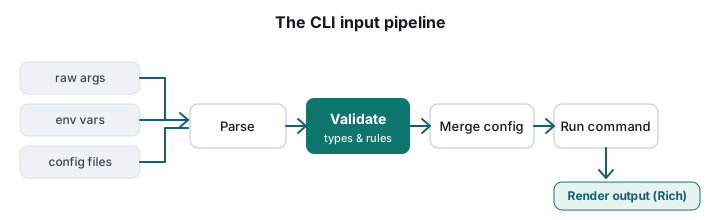
What this track covers
Validating arguments
- Advanced argument validation strategies — enforce schema-driven, pre-execution data integrity with Pydantic v2, Typer, and custom validators. Then handle the hard case: parsing nested JSON arguments in Python CLIs with Click custom types and shell-safe encoding.
Merging configuration
- Handling config files and env vars in CLIs — build a deterministic precedence chain (flags > env > file > defaults) with strict type safety. Includes the security-sensitive case of loading YAML configs safely in CLI apps.
Terminal user experience
- Interactive terminal UI with Rich — tables, panels, prompts, and live-updating output that elevate a CLI from functional to polished. Start with progress bars and spinners for Python CLIs for both deterministic and indeterminate work.
A recommended path
- Validate arguments at the boundary so bad input fails fast and clearly.
- Define a configuration precedence chain your users can reason about.
- Layer on Rich-based output to make results readable without breaking pipes.
Related tracks
Set up the project in Project Setup & Dependency Management and design the command surface in Modern Python CLI Frameworks & Architecture before polishing the input and output layers here.